
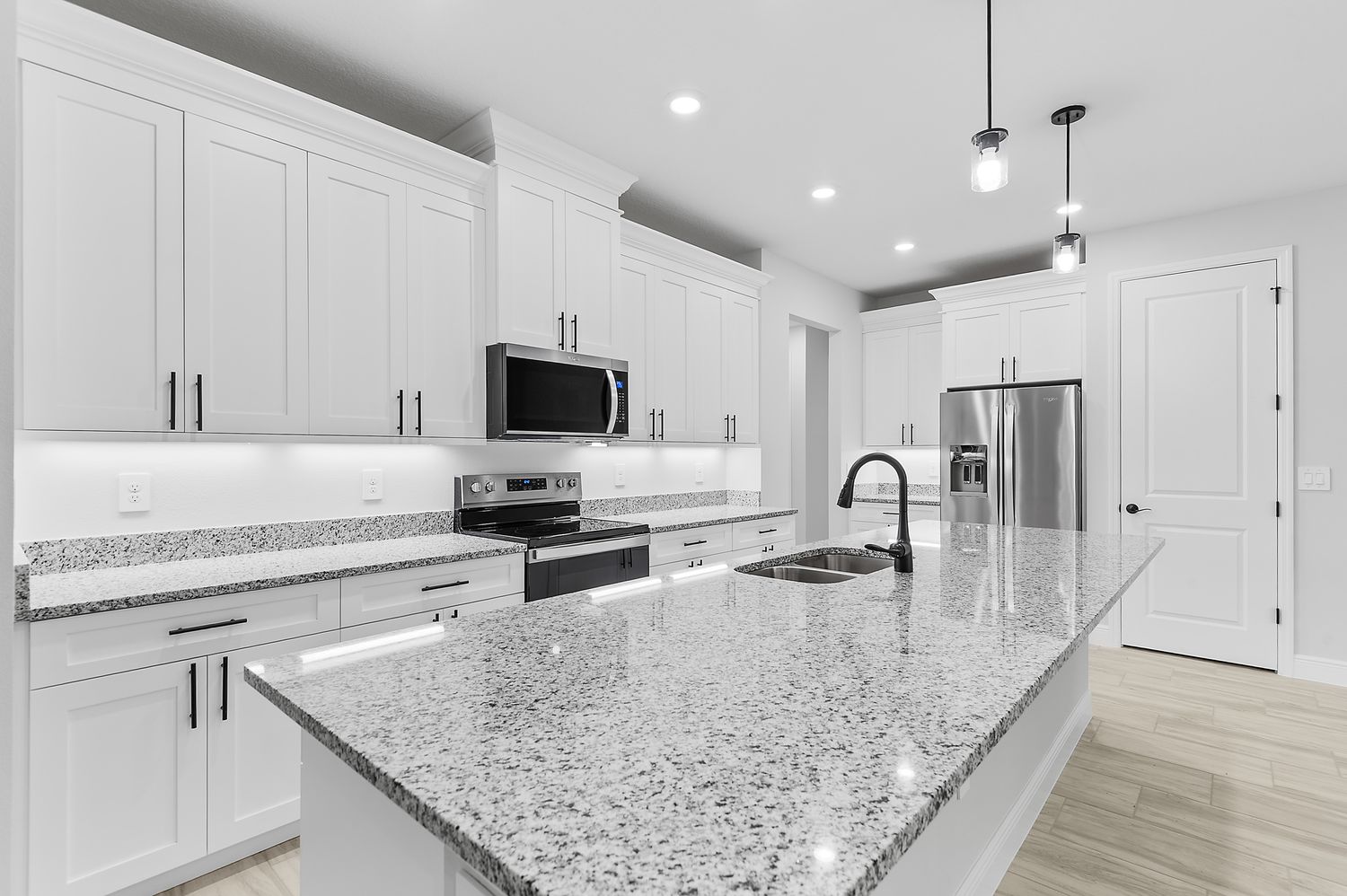
Granite is natural stone cut from a quarry. Quartz is engineered stone, made mostly from ground quartz bound together with resin and pigment. Both make hard, long-lasting kitchen counters. Granite handles heat well and every slab looks a little different, but it is porous, so a sealer helps it resist spills. Quartz never needs sealing and has a more even look, but it needs a trivet under hot pans, and standard quartz is made for indoor use. National cost averages are fairly close. The right pick comes down to how you cook, how much care you want to give your counters, and the look you like best.
This guide walks through each material side by side, then shows the granite kitchens in two homes we built in Eustis.
Quartz and granite at a glance
| Feature | Granite | Quartz |
|---|---|---|
| What it is | Natural stone, cut and polished from quarried slabs | Engineered stone made from crushed quartz, resin and pigment |
| Look | Each slab is one of a kind, with color and pattern set by where it was quarried | More even patterns, wide range of colors, including solid colors and stone looks |
| Sealing | Porous. A sealer helps it resist spills and moisture | Non-porous. No sealing needed |
| Heat | Handles high heat well | Use a trivet. High heat can discolor it |
| Everyday care | Mild soap and water or a stone cleaner | Mild cleaner and a soft cloth, no scouring pads |
| Typical project cost | About $3,250 on average, with most jobs $2,000 to $4,000 | About $4,500 on average, with jobs from $1,000 to $12,000 |
What granite is and how it holds up
Granite is a natural stone. Slabs are cut from the earth, then polished and shaped to fit your cabinets. Because it is natural, no two slabs match. The color depends on where the stone was quarried, and the flecks and veins are part of the stone itself. Many people like that their kitchen has a pattern no one else has.
Granite is hard to scratch and holds up well to hot pans. It is a natural material, so it can chip along a natural seam in the stone if something heavy hits an edge.
Granite is porous, which means liquid can soak in over time. That is where sealing comes in. The Natural Stone Institute says most granite counters do not need a sealer, but many benefit from one because it cuts down on moisture getting into the stone. It also notes that a quality sealer can last 10 to 15 years. Some retailers suggest resealing every year. Advice varies from slab to slab, so ask your fabricator what yours needs. Wiping up spills after meals goes a long way either way.
What quartz is and how it holds up
Quartz counters are engineered. Makers grind natural quartz and mix it with resin and pigment, then press it into slabs. Because it is made in a factory, the color and pattern are consistent from one slab to the next. That makes quartz a good fit if you want a clean solid white, a soft gray, or a marble look with a set pattern.
Quartz is non-porous, so it does not need sealing and resists stains. Daily care is a mild cleaner and a soft cloth. Skip steel wool and other scouring pads.
The main thing to watch is heat. Caesarstone, a quartz maker, says quartz resists heat but high heat can still damage it and cause discoloration or cloudy spots. Set hot pots and pans on a trivet. Home Depot also notes quartz can discolor over time.
Heat, sunlight and moisture in a Florida kitchen
A few everyday Florida details can help you choose.
- Outdoor kitchens and lanais. Most quartz is made for indoor use, and Caesarstone says outdoor UV light can make standard quartz fade and weaken over time. If you plan a counter on a covered lanai or outdoor kitchen, ask for a material rated for outdoor use.
- Sunny windows. Kitchens with big windows or sliders get plenty of light. If a counter sits in strong direct sun, ask your supplier how the quartz you like holds up to sunlight.
- Spills and moisture. Quartz does not absorb liquid. Granite can, so a sealer and quick cleanups keep it looking its best.
- Cooking style. If you often set pans straight down from the stove, granite is more forgiving. If you already use trivets, quartz works well.
What quartz and granite cost
Prices for the two overlap a lot. Angi’s 2026 granite cost guide puts most granite counter projects between $2,000 and $4,000, with an average of about $3,250. Angi’s quartz guide gives an average of about $4,500, with projects ranging from $1,000 to $12,000. Home Depot notes the price gap is often small, and that some granite colors cost more because they are harder to find.
These are national estimates for countertop projects. In a new home, the counters are one part of the full kitchen and home price. What moves the number most is the slab or color you pick, how many square feet of counter you have, the edge style, and cutouts for sinks and cooktops. For a wider look at what goes into the price of a new home, see our guide to the cost to build a house in Florida.
Which one fits your kitchen
Both are great choices. Here is a simple way to think about it.
- Granite may fit you best if you want a natural stone with a one-of-a-kind pattern, you cook a lot and like setting hot pans down, and you are fine wiping up spills and sealing when needed.
- Quartz may fit you best if you want an even color or a set pattern, you want counters that never need sealing, and you are happy using trivets.
- Either one works if you mostly care about a hard, long-lasting surface for a busy family kitchen.
It helps to see full slabs in person before you choose. With granite, every slab is different, so seeing the slab you will get helps you know how your island will look.
Countertops in the homes we build
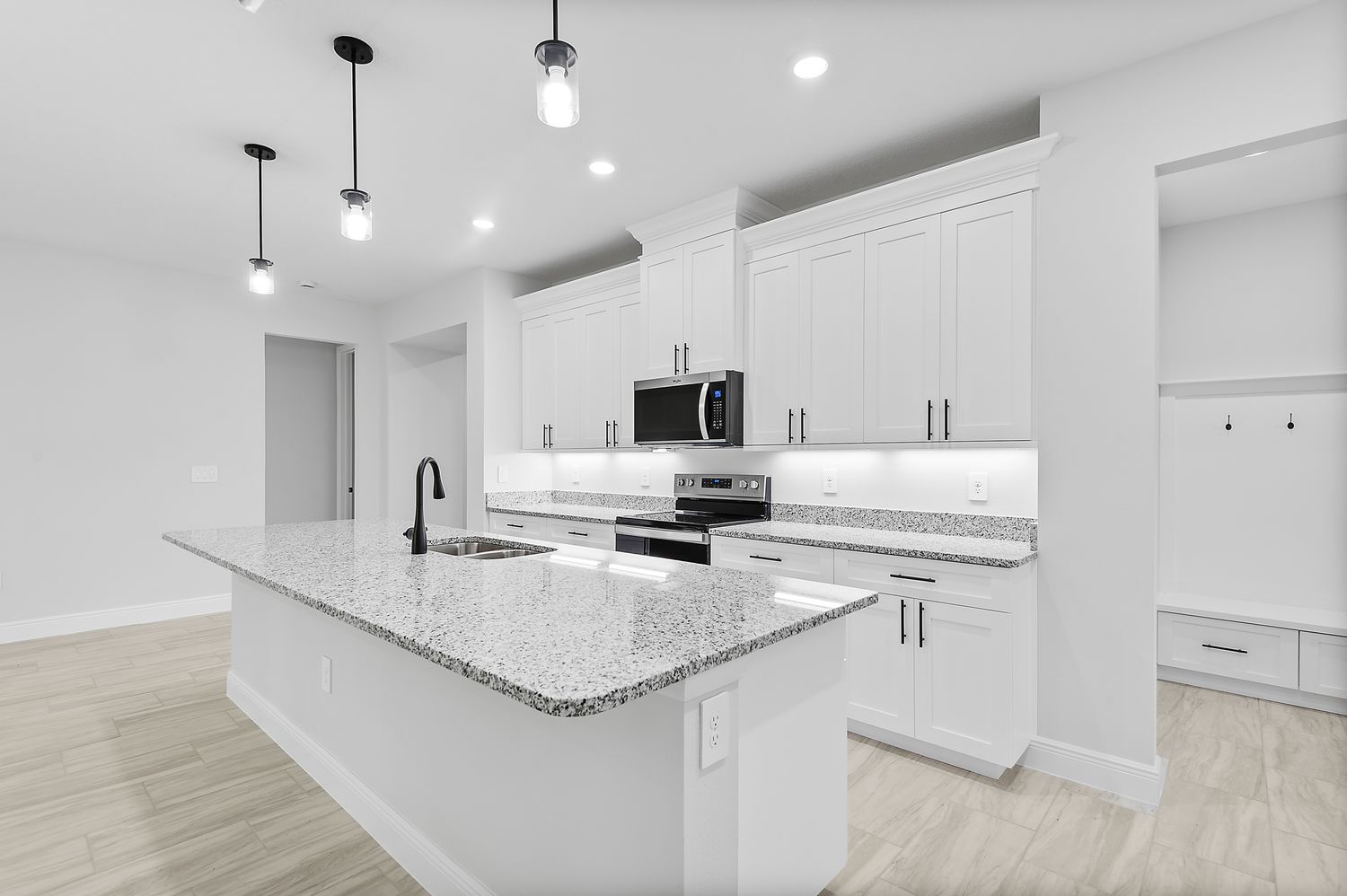
Two homes we built in the Royal Trails community in Eustis were both listed with granite counters, real wood cabinets, soft-close drawers and a large center island. The Royal at 30369 Apricot Ave also has granite counters on the dual-sink vanity in the primary bath. The Canary at 30340 W Bluebell Ave pairs its granite island with an open family room.
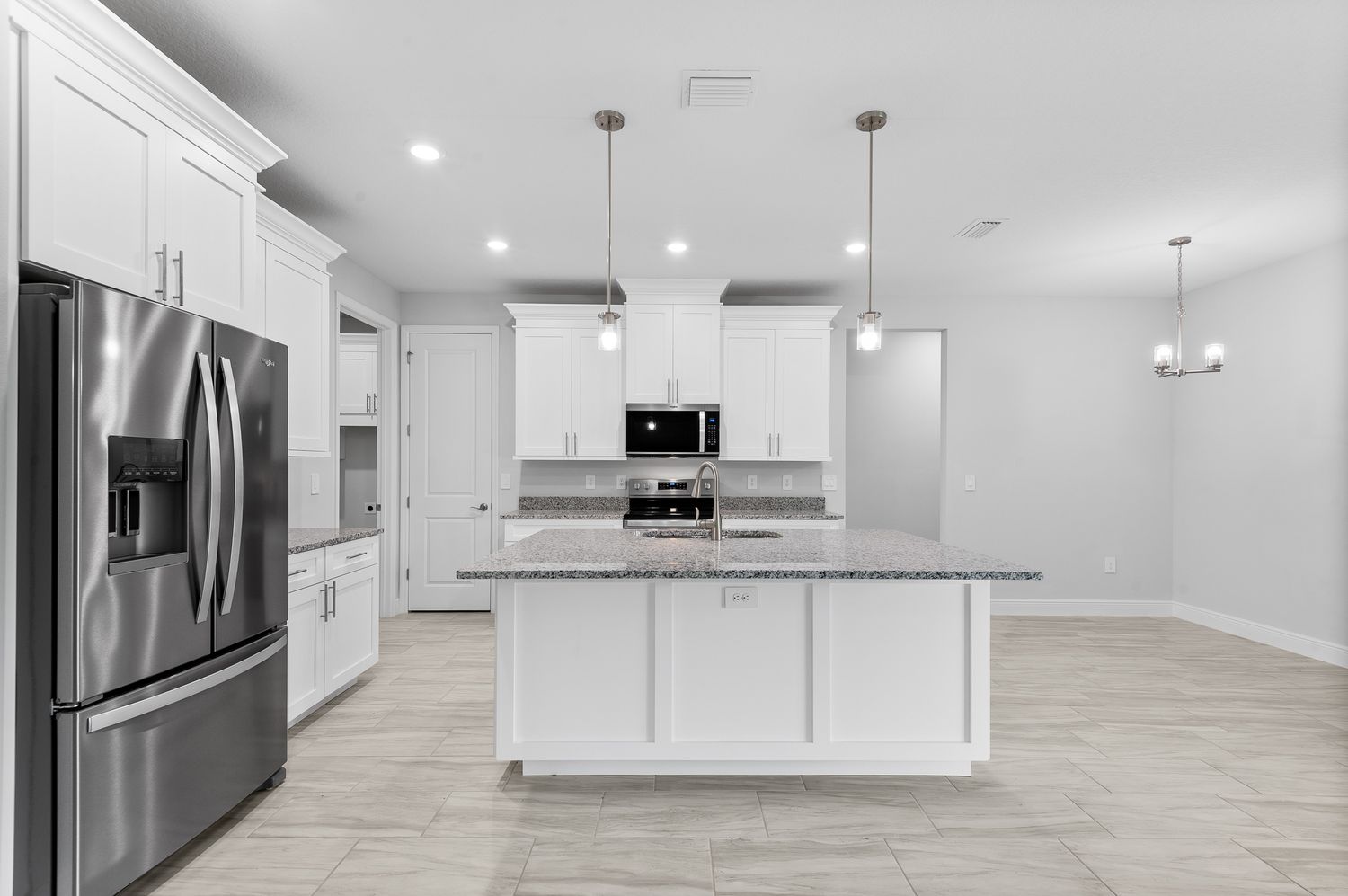
If you are building a custom home, the finishes are yours to choose, and the kitchen can be laid out around how you cook. You can also browse our fifteen floor plans to see kitchen and island layouts before you pick a counter.
Planning a kitchen for your new home?
Tell us about your lot, your plan and the kitchen you have in mind. We will come back with a price for the house and the site work, with the assumptions written down.
Common questions about quartz and granite countertops
Is quartz or granite better quality?
Both are high-quality, durable counters. Granite is natural stone that handles heat well. Quartz is engineered stone that resists stains and never needs sealing. The better one is the one that matches how you use your kitchen.
What is the downside of quartz countertops?
Quartz needs a trivet under hot pots and pans, since high heat can discolor it. Standard quartz is also made for indoor use, so it is not the right pick for a sunny outdoor kitchen unless the product is rated for outdoor use.
Do quartz countertops cost more than granite?
Often a little. Angi’s national averages are about $3,250 for a granite project and about $4,500 for quartz, but the ranges overlap and some granite colors cost more. Your slab, counter size and edge style all affect the price.
Does granite need to be sealed?
Many granite counters benefit from a sealer, which helps the stone resist moisture and everyday spills. The Natural Stone Institute says most granite does not strictly need it and that a quality sealer can last 10 to 15 years. Ask your fabricator what your slab needs.
Can you put a hot pan on granite or quartz?
Granite handles high heat well. For quartz, use a trivet or hot pad every time.