
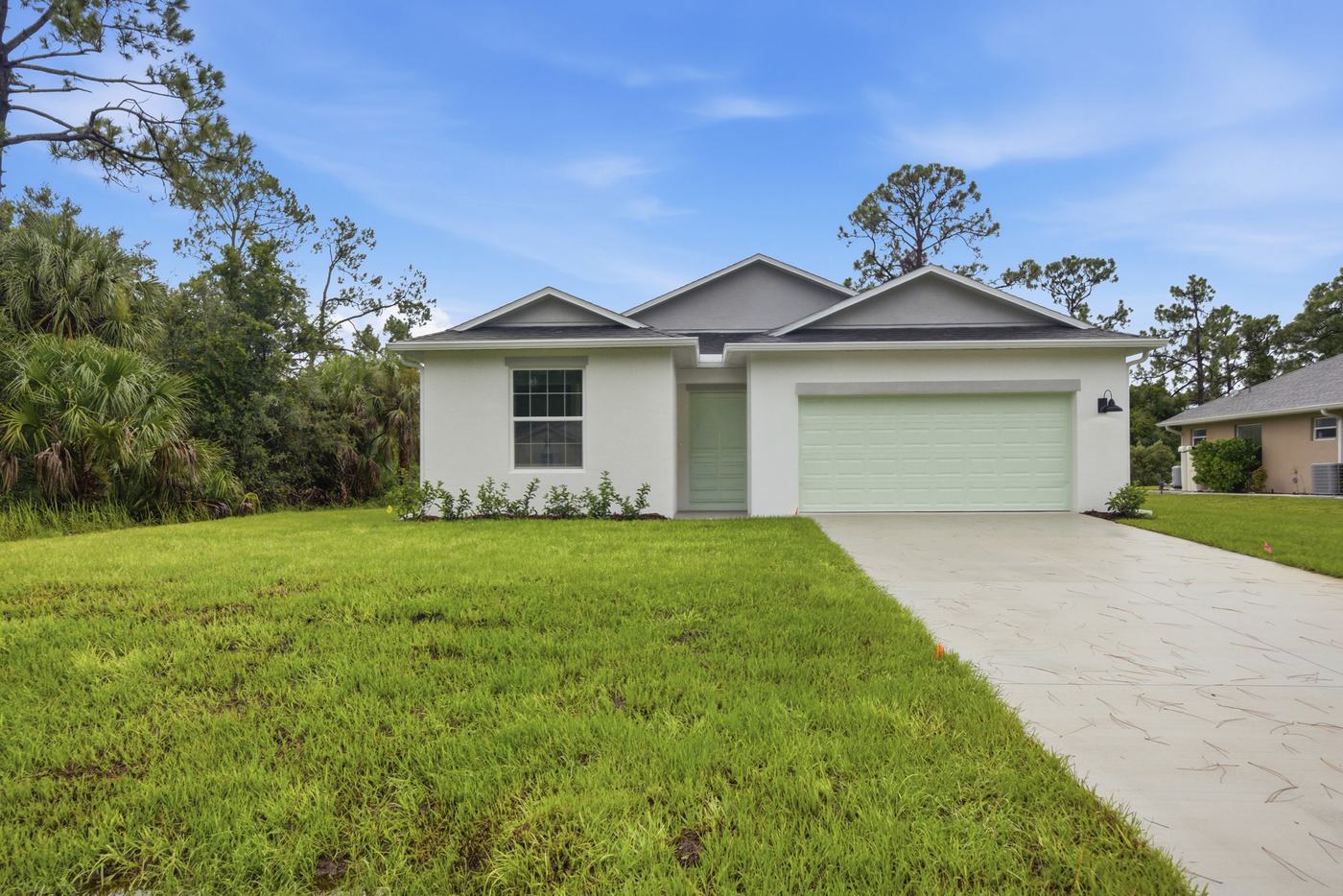
A hurricane-resistant home in Florida is one built to hold together in high wind and to keep wind-blown debris out of the house. In practice that means a strong connection from the roof down to the foundation, a well-attached roof deck, a second layer of protection under the roof covering, and windows and doors rated for the wind where the home sits. Every new home in Florida has to meet the Florida Building Code, which sets these rules. Here is what goes into a home built for storms, how the rules change by location, and what we have used on homes we have built.
Hurricane season in the Atlantic runs from June 1 to November 30, so fall is a good time to think about this while plans are still on paper.
What the Florida Building Code requires for wind
Florida has one statewide building code, and the current version is the 2023 Florida Building Code, 8th Edition. Your county or city enforces it through the building permit and a series of inspections while the home is built.
For wind, the residential code starts with a simple idea called a complete load path. The wind pushes and pulls on the roof and walls, and the house has to carry those forces all the way down into the foundation. Each connection along the way, from the roof framing to the walls and from the walls to the slab, has to be designed and built to handle it.
The code also requires exterior windows and doors to be designed for the wind loads in your area. How strong they need to be depends on the design wind speed for your location, which is set by a statewide wind map.
Wind-borne debris regions and impact protection
In a storm, flying debris can break a window or door. Once wind gets inside, it pushes on the roof from below as well as pulling on it from above. That is why the code adds extra rules in areas called wind-borne debris regions.
Under the Florida Building Code, a location is in a wind-borne debris region if either of these is true:
- The design wind speed is 140 mph or higher.
- The design wind speed is 130 mph or higher and the home is within one mile of the coast, where open water faces the shore.
In these areas, glass windows and doors have to be protected from wind-borne debris. Builders can meet this with impact-rated windows and doors, or with approved shutters or storm panels. Some homes may use precut wood panels that meet specific code limits.
Miami-Dade and Broward counties have an even stricter set of rules called the High-Velocity Hurricane Zone. Products used there must pass testing to Miami-Dade standards.
Many windows, doors, roofing products and shutters used in Florida have a Florida Product Approval number. You can look one up on the Florida Building Commission website at floridabuilding.org.
The parts of a home that matter most in a storm
The state program My Safe Florida Home focuses on four improvements that help a home hold up in high wind. They are a useful checklist for a new home too:
- Roof-to-wall connections. Connectors, often metal straps or clips, tie the roof framing to the walls so wind cannot lift the roof off.
- Roof deck attachment. The plywood or OSB sheets under the roof covering are nailed to the framing on a set pattern so they stay in place under uplift.
- Secondary water resistance. A sealed layer under the shingles or other roof covering helps keep water out if some of the roof covering blows off.
- Opening protection. Impact-rated windows and doors, or shutters, keep debris and wind from getting inside.
Wall construction matters too. Many Florida homes are built with concrete block walls finished in stucco, while others use wood framing. Both can meet the code when they are designed and built for the local wind speed.
Water is part of a storm as well. Before you build, check the flood zone for your lot on the FEMA Flood Map Service Center. A flood zone can change how high the home has to sit and what your flood insurance costs.
What we have used on homes we have built
Every home we build is permitted and inspected under the Florida Building Code for its location. Here are hurricane-related features from homes we have finished:
- Hurricane impact windows at 4570 Oakley Rd in North Port, a Foxtail we finished in 2026.
- Concrete block and stucco walls at 1835 Wheeling Ave in North Port, a Coconut I we finished in 2026.
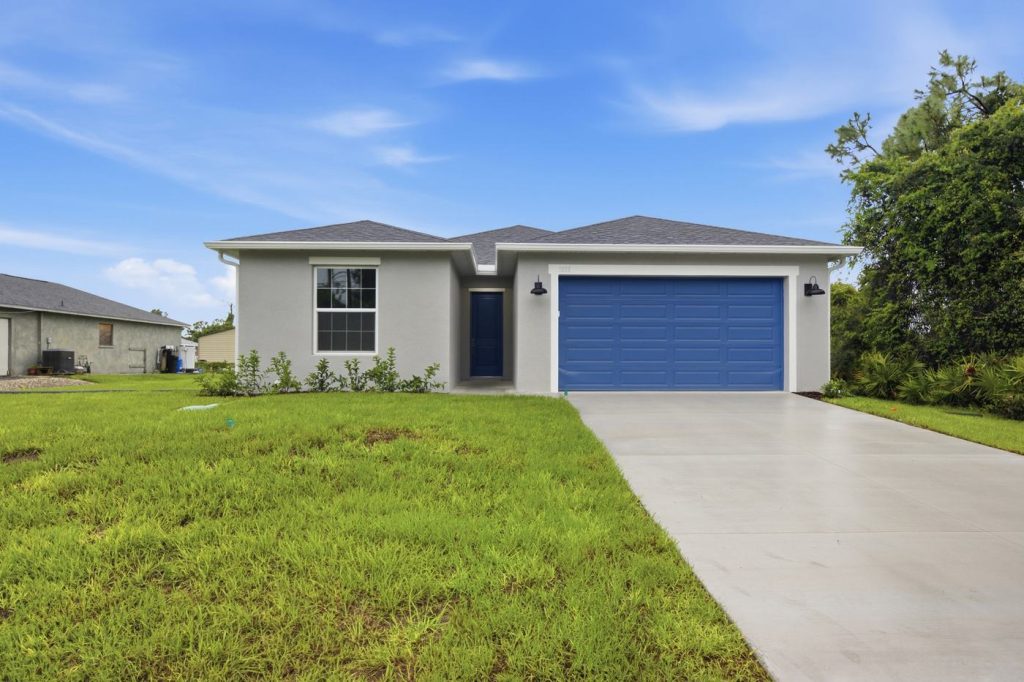
Features can differ from home to home and lot to lot. The wind speed, the debris region and the flood zone at your address all shape what the code requires. When you talk with us about a plan, ask which storm features come with it at your location, and we will walk you through them. You can compare all fifteen of our plans on our floor plans page, and see how a build moves from permit to closing on our process page.
Hurricane features and your home insurance
Florida law requires home insurance companies to offer discounts or credits for construction features that reduce wind damage. Insurers usually ask for a wind mitigation inspection report to show which features a home has, such as the roof-to-wall connections, roof deck attachment and opening protection.
Ask your insurance agent which features count for your policy and what paperwork they need. It helps to ask before you build, so you know which documents to keep after closing.
You may hear about My Safe Florida Home grants. Those grants are for existing homes built before January 1, 2008, so a new home does not qualify. The program can still be a helpful guide to which features matter.
Questions to ask before you build
- What is the design wind speed at my address, and is the lot in a wind-borne debris region?
- Will the windows and doors be impact-rated, or will the home use shutters or panels?
- Are the walls concrete block or wood frame?
- What flood zone is the lot in, and how high will the floor need to be?
- Which documents will I get at closing for my insurance company?
We are happy to answer these for any lot you own or are thinking about buying.
Ask us about building on your lot
Send us your address or parcel number. We will check the zoning, setbacks, flood zone and utilities, and show you which of our fifteen plans fit. The lot evaluation is free and there is no obligation.
Common questions about hurricane-resistant homes in Florida
Are new homes in Florida built to withstand hurricanes?
New homes in Florida must meet the Florida Building Code, which sets wind design rules based on the wind speed at each location. Homes in wind-borne debris regions also need protected windows and doors. No home is storm-proof, but the code is written to help homes hold up in high wind.
Do all new Florida homes need impact windows?
No. Protection for glass windows and doors is required in wind-borne debris regions. There, builders can use impact-rated windows and doors or approved shutters or panels. Outside those regions, windows still have to be designed for the local wind load.
Is a concrete block house better in a hurricane?
Concrete block and wood frame homes can both meet the Florida Building Code when they are designed for the local wind speed. An important part is the full load path, from the roof connections down to the foundation, plus protection for the windows and doors.
Can hurricane features lower my insurance?
Florida law requires insurers to offer discounts or credits for features that reduce wind damage. Your insurer will tell you which features count and what inspection report they need.
Where can I see what is required for my lot?
Your county or city building department can tell you the design wind speed and whether your lot is in a wind-borne debris region. The FEMA Flood Map Service Center shows the flood zone. We check the flood zone as part of our free lot evaluation.